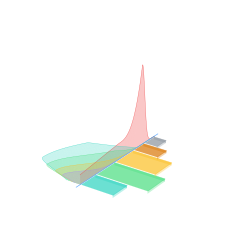
HYRR MCP server
io.github.exoma-ch/hyrr·v0.22.0Radio-isotope production, activity and dose for charged-particle beams on stacked targets
0 stars
Reviews
Write oneNobody has reviewed HYRR yet.
If you have run it, two minutes of your experience saves the next person an afternoon.
HYRR tools
No tool declarations could be read from the package source. They show once the server is installed.
Public scan report
scanner v0.1.10 · 2026-10-01 · same rubric, same numbers if you re-run it
- Code scan7 source files scanned25/25
- –Live reliabilityno gateway calls yet and no remote to proben/a
- –Tool poisoningtools not inspected (local package is not executed); not countedn/a
- Auth qualitylocal package, no credentials required12/15
- Maintenancelast push 3 days ago15/15
- Maintainer identityregistry namespace matches repository owner7/10
How HYRR compares
Against every graded MCP server, from our own scans and uptime checks. Updated after each scan run.
- Safety score
- 91/100
- higher than 85% of 48,255 servers
Install HYRR in Claude Code, Cursor or VS Code
claude mcp add hyrr -- uvx hyrr-mcp
What the publisher says
From the HYRR repository's README, as published. We do not edit it. Read it on GitHub
HYRR
Hierarchical Yield and Radionuclide Rates
A pure Python package for predicting radio-isotope production in stacked target assemblies, using TENDL cross-section data and NIST stopping power tables.
Web App | Desktop App | Documentation
Try it now — full simulation runs in the browser, no install, no data leaves your machine. Need offline access? Download the desktop app for Windows, macOS, or Linux.
What it does
- Stopping power via PSTAR/ASTAR table lookup (replaces Bethe-Bloch)
- Energy-integrated production rates for any projectile (p, d, t, ³He, α)
- Bateman equations for activity, yield, and decay chains
- Compound materials with natural or enriched isotopic composition
- Stacked layer geometries (windows, targets, degraders, backings)
- Depth-resolved heat and activity profiles
Performance
HYRR is designed for interactive use — simulations are fast enough for real-time parameter sweeps:
Compared to tools like Isotopia, HYRR is significantly faster and lighter: pure NumPy/SciPy with Parquet-backed nuclear data (no heavy ORM, no database server). The browser frontend achieves similar performance with a pure TypeScript compute engine.
Installation
uv add git+https://github.com/exoma-ch/hyrr.gitQuick start
from hyrr import TargetStack, Layer, Beam

stack = TargetStack(
    beam=Beam(projectile="p", energy_MeV=30.0, current_mA=0.15),
    layers=[
        Layer(material=havar, thickness_cm=0.0025),
        Layer(material=enriched_mo100, energy_out_MeV=12.0),
        Layer(material=copper, thickness_cm=0.5),
    ],
)

result = stack.run(irradiation_time_s=86400, cooling_time_s=86400)
result.summary()
Frontend
exoma-ch.github.io/hyrr — hosted on GitHub Pages, zero backend.
The browser frontend (frontend/) is a standalone Svelte 5 + TypeScript app with a pure-TS physics engine (no Python/WASM). Nuclear data is lazy-loaded from Parquet files via hyparquet. All computation runs locally — no server, no data upload.
The physics engine is also published as @hyrr/compute (npm workspace under packages/compute/) for use in Node.js tools and the MCP server.
Key frontend features:
- Repeating layer groups — wrap layers into groups repeated N times or until beam energy drops below a threshold
- Undo/redo — Cmd+Z / Cmd+Shift+Z with 50-deep history
- Simulation mode — Auto (live) or Manual (run on demand) with status indicator
- URL sharing + sessions — full config (including groups) encoded in URL hash; session tabs persist across reloads
- Isotope filter — shared filter bar above activity plots and activity table
Install channels
HYRR ships through one channel per surface. Pick the one that matches what you actually want:
See docs/adr/0001-mcp-single-ssot-and-install-channels.md for the rationale behind the split.
MCP Server
Shortened. The full README is on GitHub.
Nothing above is checked by us. What we check is on the safety report.
HYRR: common questions
- Is HYRR MCP server safe?
- Yes, by our scan: it is graded A (91/100). Read the HYRR safety report
- How do I install HYRR?
- It runs on your machine. Copy the Claude Code, Cursor, VS Code or Claude Desktop config from the install section.
- Does HYRR need an API key?
- No secret keys are declared. It reads 2 settings from the environment.
- Is HYRR maintained?
- The last commit was 37 days ago (2026-09-28). The latest release is v0.22.0.